
Welcome to our 2026 AFC North Pathways To IDP Fantasy Relevance breakdown, in which we’ll be reviewing players from Rookies to Year-4 players that can find their way into fantasy relevance heading into 2026!
The Baltimore Ravens and Pittsburgh Steelers feel like the AFC North’s version of Sub-Zero and Scorpion, two franchises locked in a rivalry built around physicality, defense, and the urge to finish each other off every time they meet. Meanwhile, the Cincinnati Bengals resemble Johnny Cage, flashy and explosive offensively while constantly forcing games into chaotic shootouts that pressure the defense to survive high-volume environments. The Cleveland Browns fit Reptile almost perfectly, too. They are unpredictable and dangerous whenever the defensive front takes over, but never stable enough to know exactly which version of the team will show up each week, or if the team will even show up at all.


That style of football usually creates some of the best IDP environments in fantasy because the division naturally forces defenders into high-contact roles. Linebackers have opportunities to pile up tackles, EDGE rushers are constantly battling through physical games, and safeties often get dragged into downhill support because AFC North football rarely stays clean for very long. Even the depth charts reflect that mentality; if you are playing in this division, you need to be a physical player. Most of these teams carry layered EDGE rotations, crowded linebacker rooms, and veteran contracts that force younger defenders to fight for every meaningful snap.
This article focuses specifically on first-through-fourth-year defenders across the AFC North and where their current pathways to fantasy relevance stand entering the season. Some already sit one camp battle away from major snaps, while others are developing behind established veterans with long-term contracts tied to the top of the depth chart. Like climbing the Kombat Ladder, surviving the AFC North usually comes down to endurance, timing, and figuring out who is still standing by the end of the season.
Before diving into each AFC North roster, here is a quick breakdown of the labels used throughout the article:
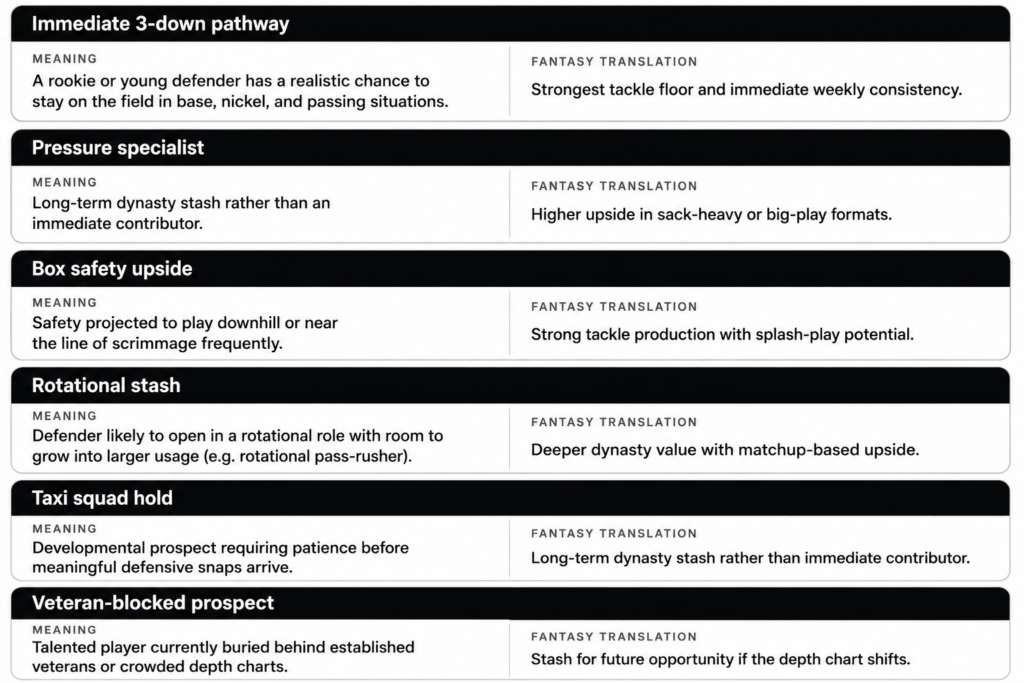
Now that we have the terminology down, let’s go down the 2026 AFC North Pathways to IDP Fantasy Relevance.
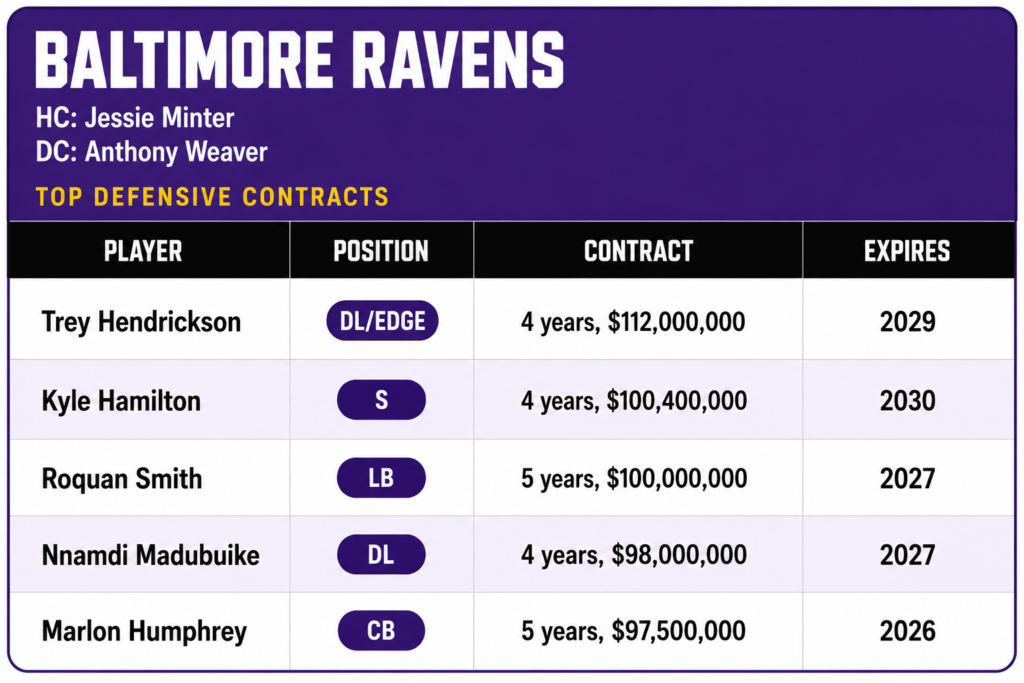
The Baltimore Ravens still feel like the final boss of the AFC North. Every team in the division may have its own identity, but Baltimore continues operating like the top dog of the division. The Ravens still combine physicality, depth, pressure, and defensive versatility better than almost anyone in the conference, but the updated depth chart also shows how much of the defense now depends on younger rotational defenders developing around an established veteran core.
Trey Hendrickson immediately becomes the centerpiece of the EDGE room, Roquan Smith still controls the middle of the defense, and Kyle Hamilton remains one of the league’s most versatile safeties, but Baltimore continues building layers behind them instead of relying entirely on older veterans to carry the workload alone.
The EDGE room stands out immediately from a fantasy perspective because the Ravens quietly have one of the most crowded developmental pass-rush groups in the division. Tavius Robinson, Mike Green, Zion Young, and Adisa Isaac all sit close enough together on the depth chart that preseason usage and camp deployment could completely reshape rotational snap counts early in the year. Baltimore rarely asks one EDGE defender outside of the top option to dominate snaps weekly, either, which creates both frustration and upside for IDP managers trying to identify which younger pass rushers could emerge inside the rotation.

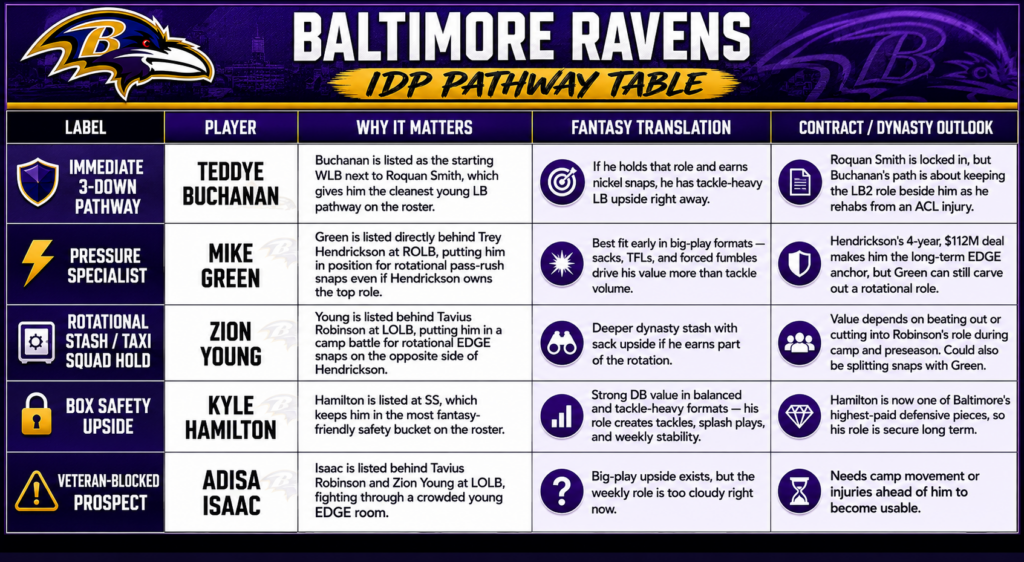
The linebacker room also feels more stable than in previous seasons. Teddye Buchanan continues working back from injury, while Trenton Simpson still fights to stabilize himself next to Roquan Smith long term. Baltimore’s defensive structure naturally creates tackle opportunities because offenses are constantly forced into physical games against the Ravens’ front, but the secondary still remains the most fantasy-friendly part of the defense because Kyle Hamilton’s deployment allows him to impact nearly every level of the field weekly.
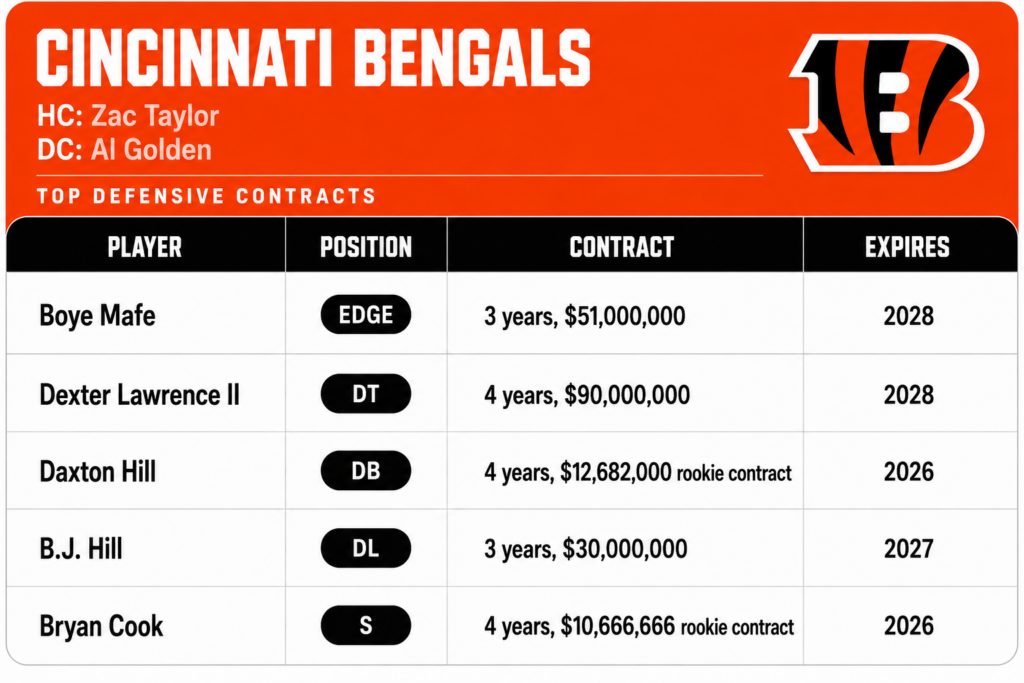
The Cincinnati Bengals look completely different defensively than they did just last year. The Bengals still have offensive firepower capable of forcing opponents into aggressive game scripts, but defensively, this is now a much younger and more developmental unit than people probably realize. The updated depth chart shows Cincinnati leaning heavily on younger defenders across the front seven, while the contract structure reflects major investments in rebuilding the defensive front around newer pieces rather than relying on older veterans to carry the entire unit.

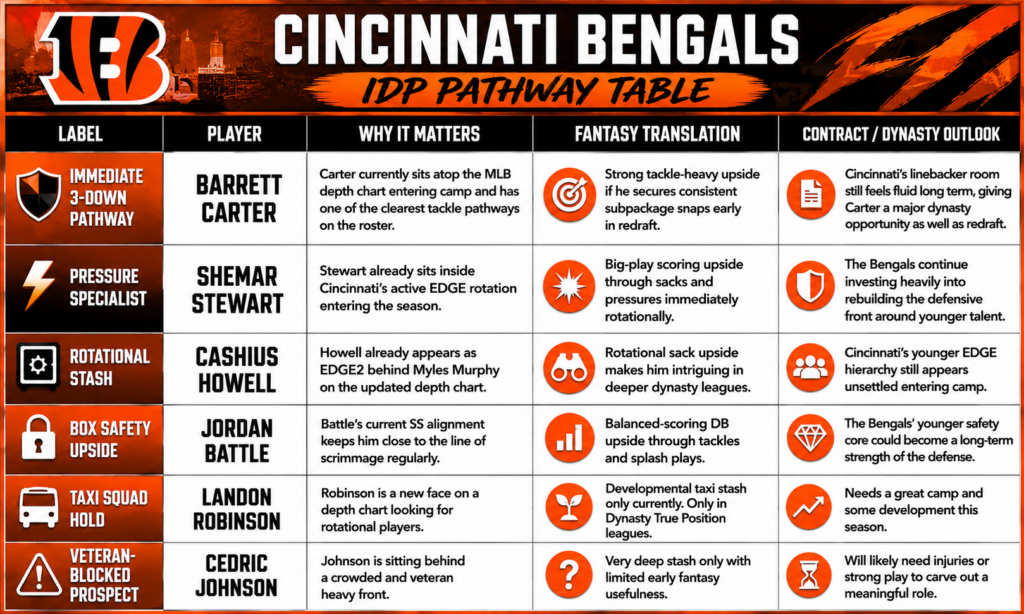
That makes this one of the more interesting IDP situations in the AFC North, as there are real opportunities for younger players to stabilize their roles quickly if they earn the coaching staff’s trust during training camp. The Bengals are not hiding players like Myles Murphy or Shemar Stewart deep on the depth chart anymore, either. Both already sit inside the active defensive line rotation, while younger linebackers like Barrett Carter and Demetrius Knight Jr. have legitimate pathways toward meaningful defensive snaps immediately.
The secondary also quietly became much more fantasy-relevant after Cincinnati added Bryan Cook next to Jordan Battle. Both safeties project as physical downhill defenders capable of piling up tackles because AFC North football rarely stays clean for very long. Combined with an aggressive defensive front featuring rotational EDGE competition, this defense suddenly looks much more attractive to dynasty IDP managers seeking younger players whose roles could expand quickly during the season.


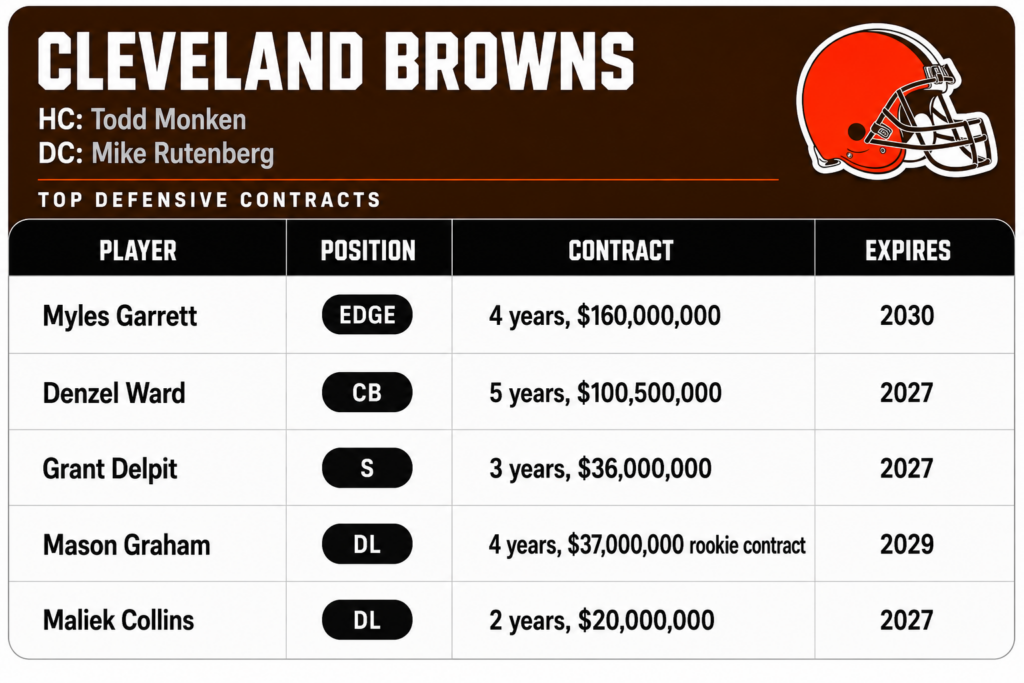
The Cleveland Browns still feel like one of the most volatile defensive environments in the AFC North, but that volatility creates fantasy opportunity if the depth chart breaks correctly. Cleveland’s front remains anchored by Myles Garrett, who still completely changes how offenses are forced to block the Browns every week, but almost everything behind him feels more open entering the season than it did a year ago. The Browns have a young leader at linebacker, multiple rotational defensive linemen capable of earning larger workloads, and a secondary that quietly has more fantasy upside than people probably realize.
Jim Schwartz’s system also naturally creates opportunities for IDP production because the defensive line is built to attack aggressively rather than simply occupy blockers. That is great for fantasy because disruptive fronts tend to funnel cleanup tackles toward linebackers and safeties once quarterbacks are forced off their spots or runners are redirected inside. Cleveland’s updated depth chart clearly reflects that structure. Myles Garrett still controls the premium EDGE role, but younger defenders like Isaiah McGuire, Alex Wright, and Mike Hall Jr. all remain positioned to fight for meaningful rotational snaps.

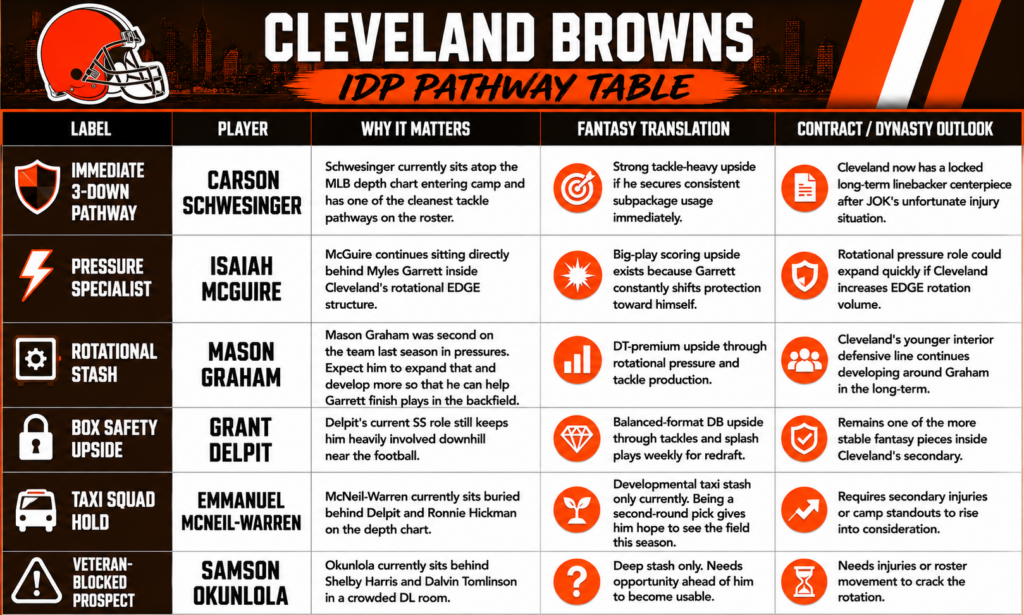
The linebacker room may honestly be the most important fantasy battle on the roster now. With Jeremiah Owusu-Koramoah’s future still uncertain because of his neck injury situation, Cleveland suddenly has one of the cleanest tackle pathways in the division available for younger defenders. That puts immediate pressure on players like Carson Schwesinger and newly acquired linebacker Quincy Williams to stabilize the middle of the defense quickly. Williams takes the place of last year’s linebacker Devin Bush, who left for the Chicago Bears in 2026 free agency.
Unlike Baltimore’s heavy rotational structure, Cleveland’s defense usually becomes easier to trust in fantasy once full-time snap leaders emerge, making this one of the more important AFC North training camp situations for dynasty managers to monitor closely. Also, the Browns just utilized a second-round pick in the 2026 NFL draft on Emmanuel McNeil-Warren. Grant Delpit is in a contract year, so I’m interested to see if the Browns work the rookie into certain packages this season to get his feet wet as the torch is passed next season.
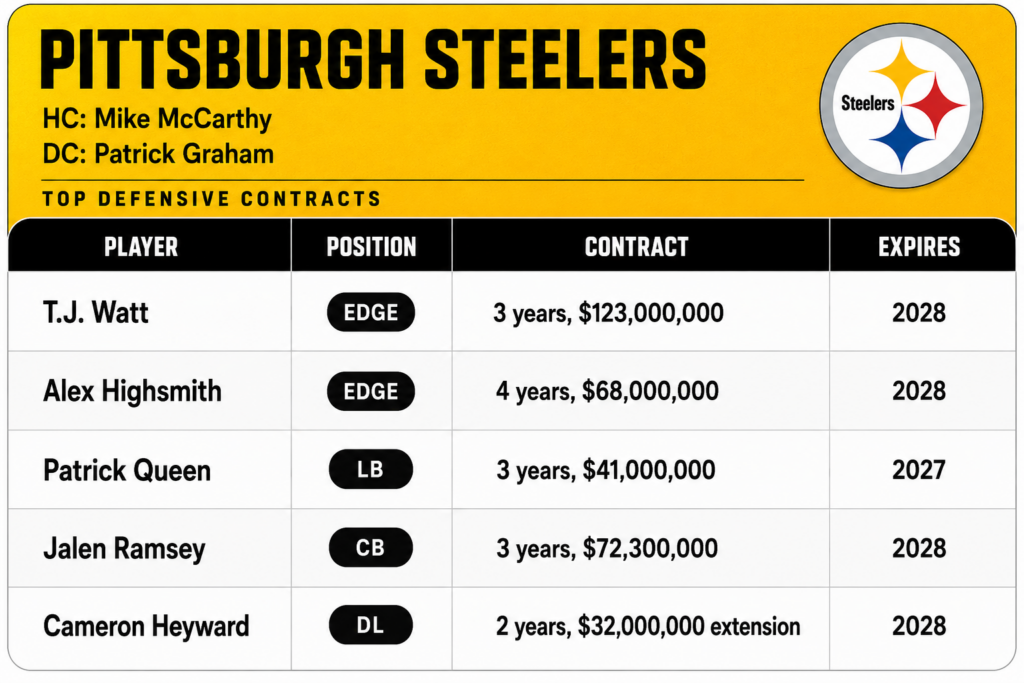
The Pittsburgh Steelers still feel like the purest version of AFC North football, which is exactly why the division comparison to Mortal Kombat fits them so well. Pittsburgh rarely tries to out-finesse opponents weekly. Everything about the roster still revolves around pressure, physicality, and surviving four quarters of trench warfare. The Steelers continue building their defense around dominant EDGE play, downhill linebackers, and defensive backs capable of playing aggressively near the line of scrimmage, which naturally creates fantasy production across multiple levels of the defense.
Even with T.J. Watt still controlling the top of the defensive hierarchy, Pittsburgh’s updated depth chart shows a surprisingly interesting collection of younger defenders sitting directly behind established veterans. Players like Jack Sawyer, Nick Herbig, Keeanu Benton, and Payton Wilson all remain positioned close enough to meaningful snaps that injuries, rotational growth, or subpackage usage could quickly create fantasy relevance. Pittsburgh also quietly rebuilt portions of the secondary with veterans like Jalen Ramsey, Jamel Dean, DeShon Elliott, and Jaquan Brisker now shaping the back end of the defense.
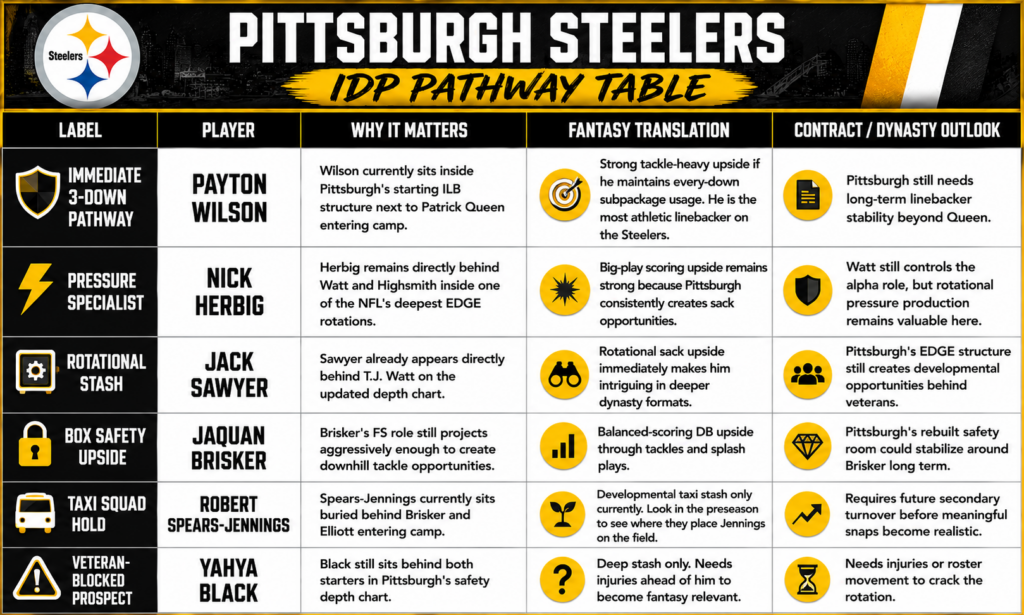
The linebacker room may honestly be one of the more serious situations for dynasty managers to monitor because Patrick Queen and Payton Wilson project as one of the more tackle-friendly pairings in the division if both maintain full-time usage. Though dynasty managers would be warned that this is Queen’s last year under his current contract, so don’t be surprised if Wilson gets more opportunities early in the season to see if he’s ready for the passing of the torch in 2027.
Pittsburgh’s defensive structure also continues to create sack opportunities for rotational EDGE defenders because offenses consistently dedicate extra protection to Watt and Highsmith. Unlike some teams that hide younger defenders deep on the depth chart, Pittsburgh’s current structure leaves multiple pathways open for rotational players to become fantasy relevant during the season.