Join us as we give you Dante’s Inferno Guide to IDP Preseason Football!
“Abandon all hope, ye who enter here.”
Today we examine the Nine Circles of Preseason Hell and offer the tools to get yourself out of it.
Every preseason, fantasy managers descend into an inferno of depth-chart deception, training-camp hype, and meaningless box scores. A backup records two sacks against third-string offensive linemen and suddenly becomes a “must-draft sleeper.” A veteran sits out the opening preseason game, and managers immediately assume he has lost his job. Meanwhile, the defenders quietly earning three-down roles remain buried beneath the noise.
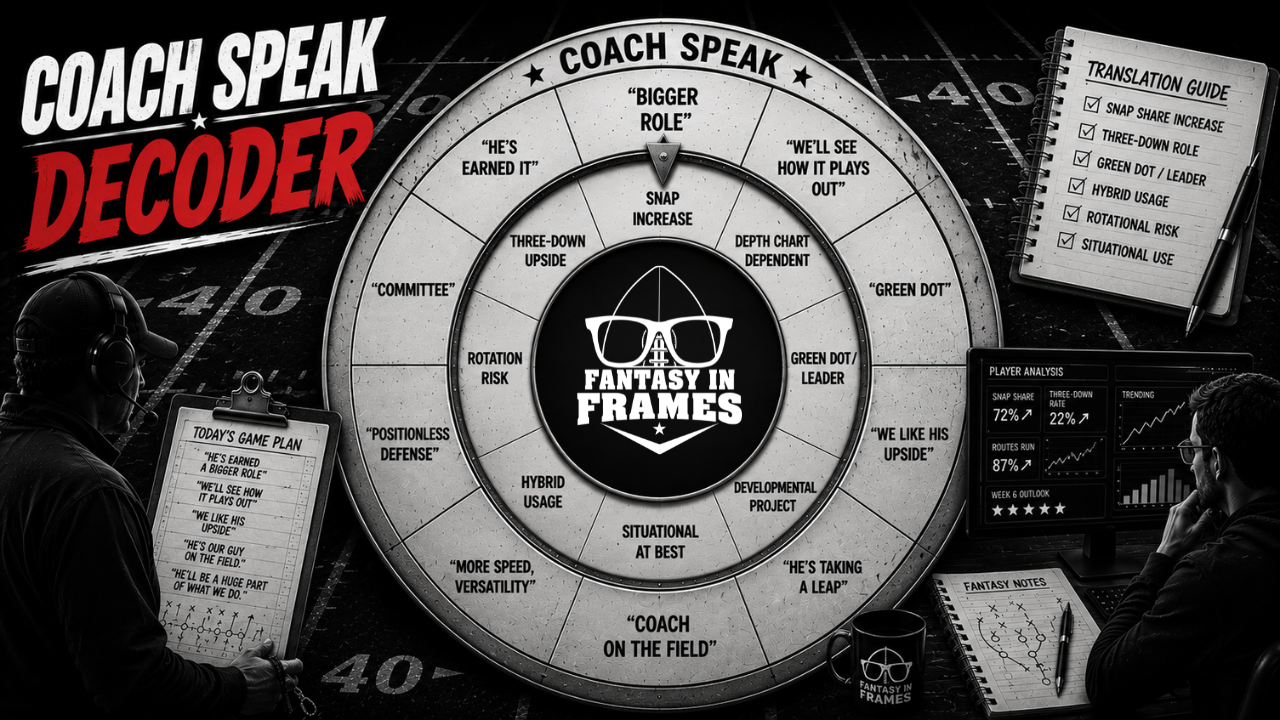
Surviving the IDP preseason requires more than following tackle totals. We need to examine who is wearing the green dot, which defenders are playing with the starters, where they are lining up, and whether they remain on the field when the offense changes personnel. In this article, we will show you some of those tools that you can use to guide us out of Fantasy Hell; we are going to examine some of the “circles” and try to fade the noise.
We also need to understand scheme.
A defender’s position on a depth chart only tells us where the journey begins. Coverage tendencies help explain how that player may actually be deployed. Does the defense primarily play man or zone? Which safety moves into the box? Which corner covers the slot? Which linebackers stay on the field in passing situations?
These are the questions that can lead us out of the preseason inferno and toward the IDP players capable of becoming fantasy stars.
The Coverage-Scheme Circle (Limbo)
Like the souls trapped in Limbo, IDP managers can become stuck between man and zone, searching for answers that the depth chart cannot provide. Coverage tendencies reveal which defenders can escape uncertainty through tackles, pressures, and plays on the ball.
The following table from Sharp Football Analysis shows each team’s man-coverage and zone-coverage rates:
2025 11-Personnel Usage Rate by Team
Scroll table horizontally →
| Rank | Team | Total Plays | 11-Pers. Plays | Usage Rate | Pass Rate | EPA Rank |
|---|---|---|---|---|---|---|
| 1 | Tennessee Titans | 1,004 | 701 | 69.82% | 71.61% | 32 |
| 2 | Tampa Bay Buccaneers | 1,068 | 734 | 68.73% | 66.89% | 18 |
| 3 | New York Jets | 1,010 | 678 | 67.13% | 62.98% | 31 |
| 4 | New Orleans Saints | 1,075 | 717 | 66.70% | 70.01% | 26 |
| 5 | Dallas Cowboys | 1,120 | 744 | 66.43% | 67.20% | 2 |
| 6 | Houston Texans | 1,088 | 718 | 65.99% | 70.06% | 14 |
| 7 | Carolina Panthers | 1,011 | 661 | 65.38% | 65.20% | 24 |
| 8 | Jacksonville Jaguars | 1,093 | 713 | 65.23% | 66.34% | 10 |
| 9 | Cincinnati Bengals | 1,057 | 678 | 64.14% | 68.14% | 6 |
| 10 | Minnesota Vikings | 954 | 609 | 63.84% | 68.31% | 29 |
| 11 | Denver Broncos | 1,092 | 688 | 63.00% | 69.48% | 12 |
| 12 | Indianapolis Colts | 1,018 | 638 | 62.67% | 62.23% | 16 |
| 13 | Buffalo Bills | 1,082 | 658 | 60.81% | 62.01% | 3 |
| 14 | New York Giants | 1,085 | 656 | 60.46% | 62.20% | 20 |
| 15 | Philadelphia Eagles | 1,010 | 599 | 59.31% | 65.61% | 23 |
| 16 | Los Angeles Rams | 1,086 | 637 | 58.66% | 70.49% | 5 |
| 17 | Detroit Lions | 1,063 | 618 | 58.14% | 70.71% | 9 |
| 18 | Las Vegas Raiders | 948 | 540 | 56.96% | 66.48% | 28 |
| 19 | Los Angeles Chargers | 1,095 | 622 | 56.80% | 70.26% | 22 |
| 20 | Washington Commanders | 990 | 562 | 56.77% | 62.10% | 15 |
| 21 | Kansas City Chiefs | 1,061 | 596 | 56.17% | 66.61% | 13 |
| 22 | Green Bay Packers | 1,010 | 562 | 55.64% | 61.57% | 4 |
| 23 | Chicago Bears | 1,103 | 569 | 51.59% | 62.04% | 8 |
| 24 | New England Patriots | 1,044 | 511 | 48.95% | 66.14% | 1 |
| 25 | Arizona Cardinals | 1,074 | 498 | 46.37% | 75.50% | 17 |
| 26 | Atlanta Falcons | 1,048 | 473 | 45.13% | 70.40% | 27 |
| 27 | Cleveland Browns | 1,030 | 453 | 43.98% | 68.21% | 30 |
| 28 | San Francisco 49ers | 1,082 | 461 | 42.61% | 70.50% | 7 |
| 29 | Seattle Seahawks | 1,015 | 420 | 41.38% | 65.48% | 21 |
| 30 | Miami Dolphins | 949 | 373 | 39.30% | 68.90% | 25 |
| 31 | Pittsburgh Steelers | 988 | 382 | 38.66% | 72.51% | 11 |
| 32 | Baltimore Ravens | 974 | 291 | 29.88% | 63.23% | 19 |
What the Coverage Rates Mean
Man Coverage
In man coverage, defenders are assigned specific receivers. Cornerbacks and safeties must remain close to their assignments, which can create opportunities for interceptions and passes defended.
Cleveland posted the NFL’s highest man-coverage rate at 43.4%. Denver, Detroit, Pittsburgh, the Jets and Baltimore were the only other teams above 30%.
Man coverage can also create blitz opportunities because defenders are not responsible for protecting a particular zone. However, fantasy managers should not assume a high man rate automatically produces consistent IDP scoring. Outside cornerbacks can play nearly every snap and still have volatile tackle production if quarterbacks avoid throwing in their direction.
Zone Coverage
Zone defenders are responsible for areas of the field rather than individual receivers. This can allow linebackers and defensive backs to keep their eyes on the quarterback, react to the ball and rally toward underneath completions.
Carolina led the NFL with an 83.1% zone rate, followed by the Chargers at 81.3% and Seattle at 80.4%. The Rams, Jaguars, Packers, Raiders and Saints also played zone on more than 77% of their measured coverage snaps.
For IDP managers, heavy zone usage can be favorable for defenders positioned near the ball. Linebackers, nickel corners and box safeties may receive opportunities to tackle receivers after short completions. The player’s exact alignment remains more important than the team’s overall zone rate.
IDP Hunter’s Take: Turning Coverage Data Into IDP Value
Coverage rates should not be used as standalone rankings. They provide context for the roles we observe during training camp and the preseason.
IDP Hunter advice: To recap, when evaluating a defender, ask:
- Does the player remain on the field in both base and nickel packages?
- Does the safety play deep, in the box or over the slot?
- Is the linebacker trusted in coverage?
- Which defensive back blitzes from the slot?
- Does the cornerback follow the opposing team’s best receiver?
- Has a coaching change altered the team’s previous tendencies?
Together, those three pieces can help IDP managers separate real opportunity from August deception.
The Personnel-Tendency Circle (Lust)
Coverage scheme tells us how a defense operates, but offensive personnel helps determine which defenders will actually be on the field.IDP managers yearn for ways to get critical information and love to know what coaches are thinking with limited tools available in the off-season. Not here, friends, abandon all hope ye who enter here.
According to SumerSports’ personnel-tendency data, 11 personnel consists of one running back, one tight end, and three wide receivers. Because the offense has three receivers on the field, defenses generally respond with a nickel package that replaces a linebacker or defensive lineman with an additional defensive back.
That makes 11-personnel usage especially important for IDP managers. It can help us identify:
- Linebackers trusted to remain on the field in nickel packages
- Nickel cornerbacks with full-time roles
- Safeties who move into the box or cover the slot
- Pass rushers likely to receive additional opportunities
- Base defenders who could leave the field in passing situations
The league-average 11-personnel usage rate in 2025 was 56.44%.
The Gluttony Circle: Feeding on IDPs Too Early
Gluttony is the temptation to fill your plate with elite defenders before building your offense. In combined drafts, secure your quarterbacks, running backs, receivers and tight ends first because offensive scarcity develops quickly, while productive linebackers, defensive linemen and defensive backs are usually available later; even experienced IDP managers sometimes reverse the process, draft defenders too early and end up with Myles Garrett leading a team whose WR1 is a waiver-wire rumor.
With 352 defensive players available to you in any given draft, versus just 224 offensive (because five linemen play and don’t score you points), that abundance is why drafting IDPs too early is fantasy gluttony: fill your plate with scarce offensive talent first because plenty of defensive production will remain available later.
Finding the Nickel Survivors (Greed)
The most important question for an IDP linebacker is not whether he appears at the top of the depth chart. It is whether he survives the transition into nickel. Think of video game Pac-Man; these slot corners who are trusted here are not only going to eat pass deflections but gobble up tackles. Chase the ghosts away with this valuable chat code.
Tennessee used 11 personnel on a league-high 69.82% of its offensive plays. Tampa Bay, the Jets, New Orleans and Dallas also exceeded 66%. When defenses faced these teams, they regularly needed additional defensive backs to account for three-wide-receiver formations.
This is where preseason deployment becomes critical. If a linebacker leaves the field whenever the opponent uses three receivers, his apparent starting role may only produce 50% to 65% of the defensive snaps. A linebacker who remains on the field beside the nickel corner could approach an every-down role.
That difference can separate an LB1 from a waiver-wire option.
Follow the Pass Rate (Wraith)
Personnel usage alone does not tell the complete story. We also need to know what an offense does from that personnel grouping.
Arizona used 11 personnel on only 46.37% of its plays, but it passed on 75.50% of those snaps—the highest rate in the league. Pittsburgh used 11 personnel at a low 38.66% rate but passed on 72.51% of those plays.
What the data means. IDP Hunter’s take: Those situations can create valuable opportunities for:
- Edge rushers
- Blitzing linebackers
- Nickel cornerbacks
- Coverage safeties
- Defensive backs with strong pass-deflection production
Meanwhile, a high-volume 11-personnel offense can provide steady opportunities for defenders who tackle well in space. Short passes and underneath completions give linebackers, slot corners and box safeties chances to build a dependable tackle floor.
The Heresy Paradox: Ignoring the Scoring System (or Inventing new ones)
The greatest IDP heresy is drafting before understanding whether your league uses tackle-heavy, big-play-heavy, or balanced scoring. A high-volume linebacker may dominate tackle-heavy formats, while an explosive edge rusher gains value when sacks, forced fumbles, and tackles for loss carry greater weight; even IDP experts occasionally rank the players first and check the scoring afterward—which is like Dante choosing a circle of Hell based on the landscaping.
No, this is a place for IDP managers who don’t accept the memo, how things are changing, and that one standard of play using three simple-to-read scoring formats actually helps the community and not divide it.
Here’s the data to evaluate. Keep it simple. Pick one of the three major scoring systems—Balanced (IDP123), Tackle Heavy (Fantasy Pros), or Big Play (also known as Big 3) and ignore the noise. The chart below highlights the easiest schedules at each IDP position, giving you a quick way to break ties, identify value, and maximize weekly matchups. No gimmicks. No meaningless bonus points. Just a clean roadmap to help you draft smarter and start the right players when it matters most.
2025 Defensive Position Group Rankings by Team
Scroll table horizontally →
| Team | DT Rank | DE Rank | LB Rank | CB Rank | S Rank |
|---|---|---|---|---|---|
| Arizona Cardinals | 3 | 28 | 30 | 7 | 23 |
| Atlanta Falcons | 31 | 11 | 9 | 9 | 10 |
| Baltimore Ravens | 26 | 15 | 7 | 1 | 2 |
| Buffalo Bills | 6 | 23 | 15 | 31 | 21 |
| Carolina Panthers | 32 | 29 | 18 | 3 | 14 |
| Chicago Bears | 18 | 31 | 29 | 21 | 6 |
| Cincinnati Bengals | 29 | 20 | 22 | 30 | 18 |
| Cleveland Browns | 22 | 13 | 17 | 11 | 16 |
| Dallas Cowboys | 16 | 25 | 31 | 32 | 22 |
| Denver Broncos | 1 | 3 | 21 | 20 | 24 |
| Detroit Lions | 21 | 5 | 10 | 24 | 11 |
| Green Bay Packers | 19 | 30 | 19 | 19 | 3 |
| Houston Texans | 23 | 8 | 24 | 13 | 15 |
| Indianapolis Colts | 17 | 7 | 11 | 23 | 26 |
| Jacksonville Jaguars | 24 | 21 | 12 | 28 | 28 |
| Kansas City Chiefs | 11 | 27 | 6 | 2 | 9 |
| Las Vegas Raiders | 2 | 10 | 4 | 6 | 19 |
| Los Angeles Chargers | 7 | 18 | 3 | 18 | 27 |
| Los Angeles Rams | 8 | 6 | 2 | 5 | 32 |
| Miami Dolphins | 12 | 9 | 1 | 12 | 7 |
| Minnesota Vikings | 25 | 32 | 23 | 27 | 5 |
| New England Patriots | 10 | 16 | 8 | 16 | 20 |
| New Orleans Saints | 27 | 2 | 13 | 22 | 17 |
| New York Giants | 9 | 24 | 25 | 14 | 13 |
| New York Jets | 5 | 1 | 5 | 26 | 30 |
| Philadelphia Eagles | 20 | 22 | 28 | 29 | 25 |
| Pittsburgh Steelers | 30 | 26 | 16 | 4 | 1 |
| San Francisco 49ers | 14 | 14 | 32 | 10 | 29 |
| Seattle Seahawks | 4 | 4 | 14 | 25 | 31 |
| Tampa Bay Buccaneers | 28 | 17 | 26 | 8 | 12 |
| Tennessee Titans | 13 | 12 | 20 | 17 | 4 |
| Washington Commanders | 15 | 19 | 27 | 15 | 8 |
The Coaching-Change Circle (Violence)
Nothing sends IDP managers to violence quicker than drafting off of last season’s info. Going deeper into the preseason inferno faster than assuming last season’s defensive roles will continue under a new coaching staff.
Fourteen NFL teams enter 2026 with a new defensive coordinator. New England also made Zak Kuhr its full-time coordinator after he served in an interim capacity. These changes can affect defensive fronts, coverage tendencies, blitz rates, safety alignments and which linebacker wears the green dot. NFL coaching tracker
These are the defenses IDP managers must monitor:
2026 New Defensive Coordinators & IDP Outlook
Scroll table horizontally →
| Team | New Defensive Coordinator | Expected Direction | IDP Question |
|---|---|---|---|
| Bills | Jim Leonhard | Multiple fronts, disguised coverages and pressure packages | Who wears the green dot, and how will the safeties be deployed? |
| Dolphins | Sean Duggan | Jeff Hafley-influenced, aggressive coverage with a four-man front | Which linebackers earn every-down roles? |
| Jets | Brian Duker | Secondary-driven system with pressure and coverage flexibility | Does the defense remain one of the league’s heavier man-coverage units? |
| Ravens | Anthony Weaver | Jesse Minter-influenced multiplicity, simulated pressure and disguise | Which edge rushers and defensive backs benefit from the pressure packages? |
| Browns | Mike Rutenberg | Expected to move away from Jim Schwartz’s more predictable attacking front | Will Cleveland remain the NFL’s most man-heavy defense? |
| Steelers | Patrick Graham | Multiple fronts with hybrid assignments and disguised pressure | How will the new system affect T.J. Watt and Pittsburgh’s inside linebackers? |
| Titans | Gus Bradley | Four-man rush, zone coverage and a Cover 3 foundation | Which linebacker earns the every-down green-dot role? |
| Raiders | Rob Leonard | Aggressive 3-4 structure with physical, attacking roles | Can Jeremy Chinn become a featured box safety? |
| Chargers | Chris O’Leary | Expected to retain elements of Jesse Minter’s versatile system | Which linebacker survives nickel packages? |
| Cowboys | Christian Parker | Vic Fangio-influenced fronts, coverage disguise and increased flexibility | How will the 3-4 transition affect the edge and linebacker rotations? |
| Giants | Dennard Wilson | Aggressive coverage with pressure from multiple defensive levels | Which safety moves into the box, and who calls the defense? |
| Commanders | Daronte Jones | Brian Flores-influenced disguise, pressure and defensive-back versatility | Which slot defender or safety becomes the fantasy winner? |
| Packers | Jonathan Gannon | Flexible fronts, zone concepts and adaptable personnel usage | Will Green Bay use a 4-3, a 3-4 or a truly multiple front? |
| 49ers | Raheem Morris | Five-man fronts, disguised coverages and greater structural variety | How will the changes affect Fred Warner and San Francisco’s edge defenders? |
Buffalo Bills: Jim Leonhard
Jim Leonhard arrives after serving as Denver’s assistant head coach and defensive pass-game coordinator. His defenses have traditionally emphasized versatility, disguise and the ability to generate pressure without revealing the rush before the snap.
For IDP managers, the green dot is the first question. Buffalo’s defense has historically rotated linebackers and used two-high safety structures. We need to determine whether Leonhard identifies one full-time linebacker or continues dividing responsibilities.
Safety alignment also deserves attention. A defensive back who consistently moves into the box or slot could emerge as a valuable IDP option.
Miami Dolphins: Sean Duggan and Jeff Hafley
Sean Duggan is the defensive coordinator, but new head coach Jeff Hafley will significantly influence the scheme. Hafley’s background includes aggressive coverage, a four-man defensive front and an emphasis on stopping the run before attacking the quarterback.
The major IDP question is linebacker usage. Managers should watch which linebackers remain on the field in nickel packages and who receives the communication helmet.
Miami’s safeties could also benefit if Hafley gives one defender an aggressive downhill role instead of keeping both players deep.
New York Jets: Brian Duker
Brian Duker arrives after working as Miami’s defensive pass-game coordinator and secondary coach. His background suggests an emphasis on coverage detail and defensive-back versatility.
The Jets played man coverage at a 30.9% rate last season, the fifth-highest rate in the league. The preseason should reveal whether Duker maintains that approach or introduces more zone coverage.
A scheme that continues using man coverage and defensive-back pressure could create opportunities for slot defenders and safeties. However, outside cornerbacks may remain volatile IDP options if quarterbacks avoid them.
Baltimore Ravens: Anthony Weaver and Jesse Minter
Anthony Weaver returns to Baltimore as defensive coordinator, but new head coach Jesse Minter will also shape the defense. Minter’s systems are known for disguise, simulated pressures and changing the defensive picture after the snap.
This could create favorable opportunities for versatile edge defenders, blitzing linebackers and defensive backs capable of attacking from different alignments.
Managers should monitor how frequently Baltimore rushes four defenders while creating confusion along the offensive line. A player may produce significant pressure without lining up as a traditional defensive end on every snap.
Cleveland Browns: Mike Rutenberg
Mike Rutenberg replaces Jim Schwartz, creating one of the most important scheme changes for IDP managers.
Cleveland led the NFL with a 43.4% man-coverage rate and also played more man coverage than any other defense in the Sharp Football Analysis table. Schwartz’s system relied heavily on an attacking front and tight coverage behind it.
The Browns may become less predictable under Rutenberg. Preseason usage should reveal whether Cleveland maintains its high man rate, how frequently it blitzes, and whether its linebackers receive expanded responsibilities.
The talent remains attractive, but managers should not automatically apply Schwartz-era expectations to the new system.
Pittsburgh Steelers: Patrick Graham
Patrick Graham brings one of the NFL’s most multiple defensive systems to Pittsburgh. He has experience using both three- and four-man fronts while moving edge defenders, linebackers and defensive backs throughout the formation.
T.J. Watt should remain the centerpiece, but his exact alignment and positional designation will matter. Graham’s history of using hybrid fronts could also create pressure opportunities for Pittsburgh’s defensive linemen and safeties.
Inside linebacker usage will be especially important. If Graham rotates defenders based on personnel packages, Pittsburgh may not provide the dependable three-down linebacker fantasy managers want.
Tennessee Titans: Gus Bradley
Gus Bradley’s defensive philosophy has traditionally featured a four-man front and a heavy dose of zone coverage, particularly Cover 3 principles.
That approach can produce valuable IDP roles. Defensive linemen are generally asked to attack without relying on heavy blitz volume, while linebackers and safeties rally toward underneath completions.
The green dot will be critical. Bradley has frequently trusted a primary linebacker to handle communication and remain on the field for all three downs. That role could produce a strong tackle floor if one player clearly separates from the competition.
Las Vegas Raiders: Rob Leonard
Rob Leonard is expected to install an aggressive 3-4 defense that emphasizes physicality and versatility.
Jeremy Chinn could become one of the biggest fantasy beneficiaries. His size and tackling ability make him a natural candidate for a box-safety or hybrid-linebacker role. If Las Vegas allows Chinn to play near the line of scrimmage and contribute as a blitzer, he could provide tackles, pressures and splash plays.
Managers must also determine which Raiders edge defenders receive the most pass-rushing snaps and whether the defense produces a reliable every-down inside linebacker.
Los Angeles Chargers: Chris O’Leary
Chris O’Leary replaces Jesse Minter, who left to become Baltimore’s head coach. The Chargers are expected to retain elements of Minter’s versatile system, but preseason deployment will show how much O’Leary changes.
The biggest concern is linebacker rotation. Multiple defenses can be excellent for generating pressure while frustrating fantasy managers with changing personnel packages.
Watch which linebacker plays beside the nickel corner and remains on the field during obvious passing situations. That player has the best opportunity to become the defense’s dependable tackle producer.
Dallas Cowboys: Christian Parker
Christian Parker arrives from Vic Fangio’s staff in Philadelphia, where he served as defensive backs coach and pass-game coordinator. Dallas is expected to become more multiple up front while incorporating Fangio-style coverage disguise.
The transition toward a 3-4 structure could significantly affect positional eligibility and snap distribution. Edge defenders may be classified as linebackers on some fantasy platforms, while Dallas’ off-ball linebackers could face increased competition for snaps.
Managers should monitor:
- Which player wears the green dot
- Whether Dallas uses two full-time inside linebackers
- Which edge defenders play on passing downs
- How often the safeties enter the box
- Whether the defense rotates from two-high looks after the snap
Dallas is now on its fourth defensive coordinator in four seasons, making previous usage one of the least dependable guides to its 2026 roles. Dallas Cowboys
New York Giants: Dennard Wilson
Dennard Wilson joins John Harbaugh’s staff after serving as Tennessee’s defensive coordinator. Wilson has a defensive-back background and has shown a willingness to use aggressive coverage and pressure.
The Giants have several players capable of moving around the formation, but that versatility can produce uncertainty for IDP managers.
The preseason should reveal which safety plays closer to the line of scrimmage and whether one linebacker receives the green dot. A safety who combines box snaps with slot responsibilities could become the most valuable defensive back in this system.
Washington Commanders: Daronte Jones
Daronte Jones arrives from Minnesota, where he worked under Brian Flores. That background suggests Washington could use more disguise, simulated pressure and defensive-back movement.
This is particularly interesting for the Commanders’ safeties and slot defenders. Flores’ system regularly asks defensive backs to blitz, show pressure and rotate after the snap.
The fantasy winner may not be a traditional linebacker. A versatile safety or nickel defender could earn enough tackles, pressures and coverage plays to become an every-week IDP starter.
Green Bay Packers: Jonathan Gannon
Jonathan Gannon replaces Jeff Hafley after spending three seasons as Arizona’s head coach. Gannon has experience with both four- and three-man fronts, making Green Bay one of the most difficult defenses to project before the preseason.
The Packers officially naming a player as a defensive end or linebacker will not necessarily tell us how he will be used. Managers must monitor alignments and responsibilities.
For IDP purposes, the important questions are:
- Will Green Bay primarily use a 4-3 or 3-4 front?
- Which edge defenders rush on passing downs?
- Will one linebacker receive an every-down role?
- Which safety plays closer to the line of scrimmage?
San Francisco 49ers: Raheem Morris
Raheem Morris is giving San Francisco one of the league’s most notable defensive makeovers. The 49ers are moving beyond their traditional four-down structure by experimenting with five-man fronts, disguised coverages and more varied secondary responsibilities.
This does not necessarily reduce Fred Warner’s value, but it could change what happens around him. Warner remains capable of handling coverage, communication and run-defense responsibilities in nearly any structure.
The larger questions involve the defensive line and secondary. Five-man fronts could create favorable one-on-one opportunities for San Francisco’s edge defenders, while disguised coverages may allow a safety or nickel defender to become more involved near the line of scrimmage. NFL.com
IDP Hunter’s Take: Do Not Draft the Scheme. Instead, draft the Role
A coordinator’s history provides a valuable starting point, but it does not guarantee how the new defense will operate. Good coaches adjust their systems to fit their personnel.
During the preseason, IDP managers should look for evidence:
- Who wears the green dot?
- Which linebackers remain on the field in nickel?
- Which safeties consistently play in the box?
- Which defensive backs cover the slot?
- Which edge defenders participate in obvious passing situations?
- Which players maintain their roles when the starters face 11 personnel?
- Does the defense actually resemble the coordinator’s previous system?
The coaching résumé gives us the map. Preseason deployment tells us whether the defense is truly following it.
The Circle of Violence: Linebacker Battles (Fraud)
So who is the fraud pretender and who is the real deal? Training camp is where depth-chart assumptions meet violence, competition, and opportunity. These linebacker battles could determine several of the most valuable three-down roles in IDP leagues.
Buffalo Bills: Dorian Williams vs. Kaleb Elarms-Orr
Williams’ multiple injuries have opened the door for Elarms-Orr to challenge for the starting job beside Terrel Bernard.
Dallas Cowboys: DeMarvion Overshown vs. Jaishawn Barham
Overshown has proven he can play and wear the green dot, but his inability to remain healthy gives Barham an opportunity.
Indianapolis Colts: Akeem Davis-Gaither vs. Bryce Boettcher
ADG knows the system and has the experience, but how long can he keep the rookie(s) grounded for?
Miami Dolphins: Jacob Rodriguez vs.Tyrel Dodson
Rodriguez’s tackling ability and knack for creating turnovers make him difficult to ignore. Rodriguez may be a year away, though.
Minnesota Vikings: Jake Golday vs. Eric Wilson vs. Blake Cashman vs. Ivan Pace Jr.
Immediate shakeup incoming for the Vikings’ linebacker room.
New York Giants: Arvell Reese vs. Micah McFadden vs. Darius Muasau
If Arvell Reese is going to be the guy, McFadden and Muasau are the only things standing in the way as immediate starters.
Tampa Bay Buccaneers: Josiah Trotter vs. SirVocea Dennis
Tampa Bay rebuilt its linebacker room by drafting Trotter and signing Alex Anzalone, placing Dennis in a fight for playing time. Trotter’s college tackle production. Stay tuned.
Tennessee Titans: Cody Barton vs. Anthony Hill Jr.
Barton brings veteran stability, but Hill’s impressive offseason and placement beside Cedric Gray for Robert Saleh’s staff.
Washington Commanders: Sonny Styles vs. Leo Chenal vs. Frankie Luvu
Styles makes him the favorite to replace Bobby Wagner, leaving Chenal and Luvu to compete for the other primary role. Luvu owns the experience and production advantage, but the new coaching staff must determine how all three fit together.
IDP Hunter’s Take: What IDP Managers Should Watch
Do not focus only on which player starts the preseason game. Follow the green dot, nickel-package snaps, and who remains on the field during third downs—those clues will reveal the linebackers with true every-down value.
Final Circle: The Preseason Test (Treachery)
These statistics represent 2025 tendencies, not guaranteed 2026 results. Coaching changes, new quarterbacks, roster additions, and injuries can all alter how frequently an offense uses a particular personnel package.
During the preseason, IDP managers should monitor:
- Which linebackers play when the defense enters nickel
- Which defensive back fills the nickel role
- Which safety moves toward the line of scrimmage
- Which edge rushers enter during passing situations
- Whether a defense substitutes against three-receiver formations
- Whether new offensive coordinators retain their teams’ previous personnel tendencies
Depth charts tell us who receives the ceremonial starting designation. Personnel usage tells us which players have roles capable of producing fantasy points.